
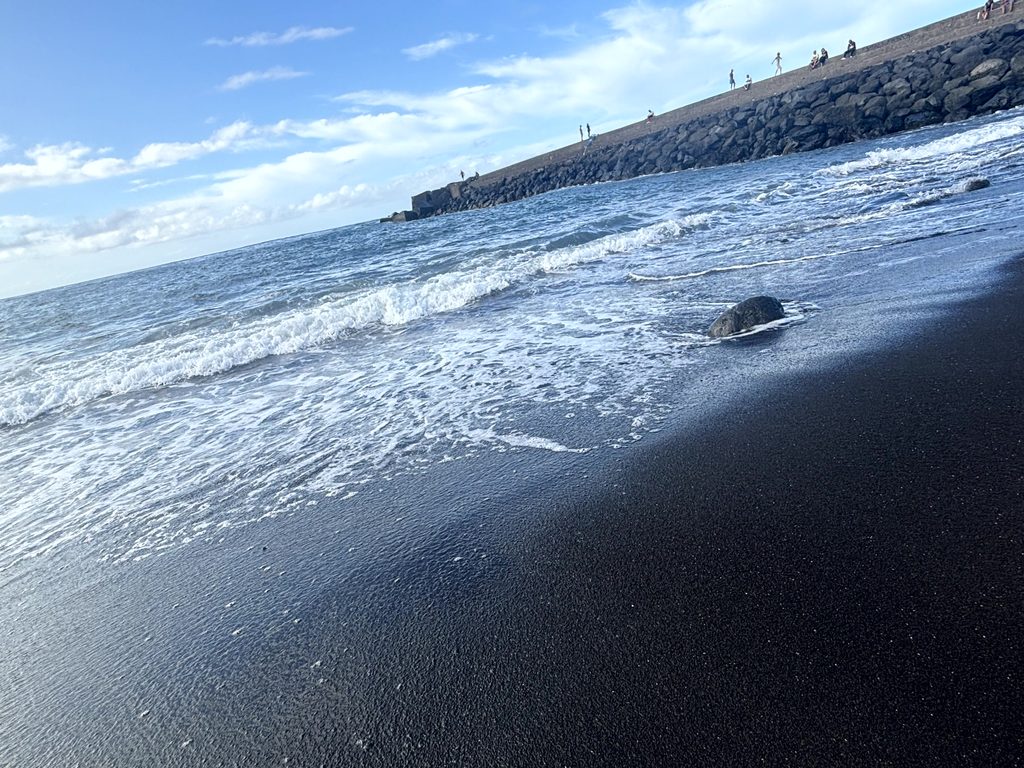
It’s January in Tenerife. Back home, the driveway is iced over. Here, you’re walking on black sand, the Atlantic is rolling in white and loud against it, and above the town behind you, a volcano is wearing a scarf of clouds.
That was the whole idea.
For my 50th birthday trip, I wanted one thing: a beach in January.
My actual birthday is January 2. Jim took me to Nashville, and my brother and sister surprised me by showing up. A couple of weeks later, Jim, Aaron, and I flew to Spain. We went looking for the warmest, farthest-south corner of Europe we could find, and that’s how we ended up in Tenerife in the Canary Islands.
We flew into Madrid, caught a connecting flight straight to Tenerife, and spent about three nights in Puerto de la Cruz on the north coast. Teide, the highest peak in Spain, sat above the town the whole time with clouds wrapped around its shoulders. We never went up it. We were there for the beach.
Here’s what we did, what I’d tell you to add, and why January is a smart time to go.
Tenerife Weather in January
Tenerife sits at roughly the same latitude as Orlando, Florida. The Canary Current and the trade winds give the coast a mild climate all winter.
In January, coastal highs average around 68 to 72°F (20 to 22°C), with more than 10 hours of daylight. Rain usually comes as short showers, a little more often on the green north coast than the sunny south. It’s noticeably cooler up in Teide National Park.
If you’re coming from a northern winter, that’s the whole appeal.
Where We Stayed
We stayed at the AluaSoul Orotava Valley in Puerto de la Cruz. They upgraded us to one of their nicer rooms, with a separate bedroom, a pull-out couch in the living room for Aaron, and a really nice balcony. It was a comfortable place to stay, and the rooftop pool was nice.
The one thing I’d flag: there was only one restaurant on site. The food was decent, but by the second day we were tired of it. If you stay at a resort-style hotel in Tenerife, plan to eat out in town.
What We Did
Playa Jardín. On our first afternoon we walked down to the black sand beach and along the boardwalk, then came back and explored the hotel. That was the whole day, and it was exactly right after a long travel day. We kept going back to the beach the rest of the trip. That’s why we came.
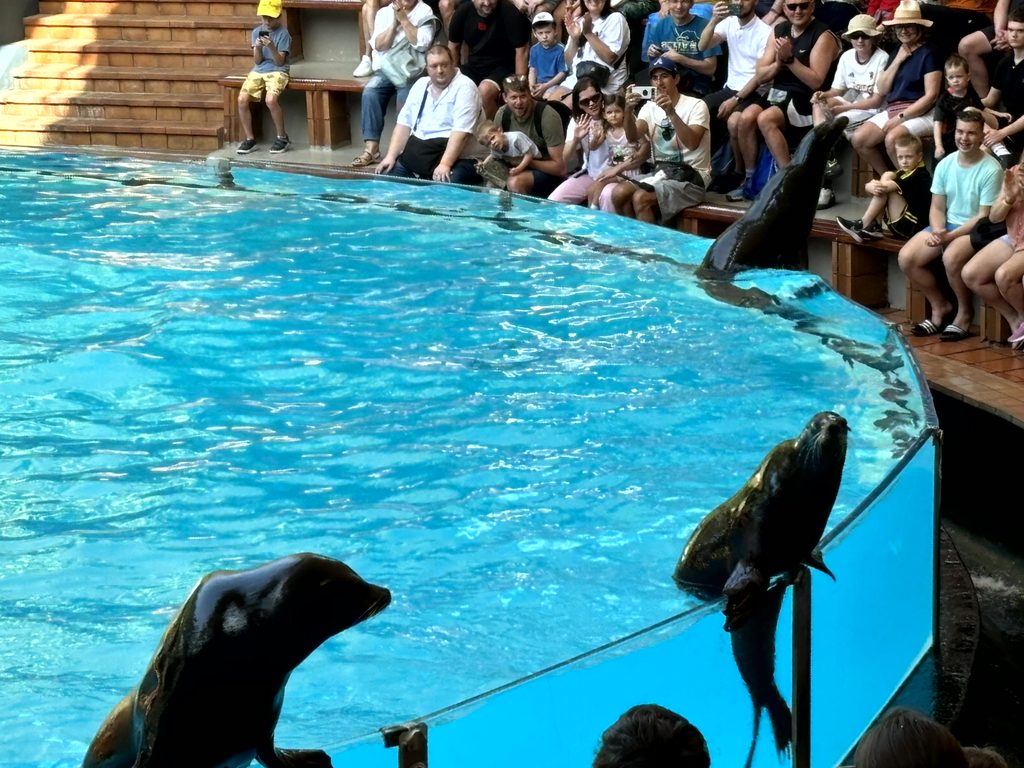
Loro Parque. This surprised me. It’s one of the nicest zoos I’ve ever been to, maybe my favorite. The whole park is beautifully landscaped and well kept. We saw the sea lion show, rode a golf cart around the park (Aaron’s favorite part), and spent time with the parakeets and the flamingos. There’s an indoor aquarium, one of the best penguin exhibits I’ve seen, chimpanzees playing outside, and an alligator and crocodile exhibit. Give it most of a day.
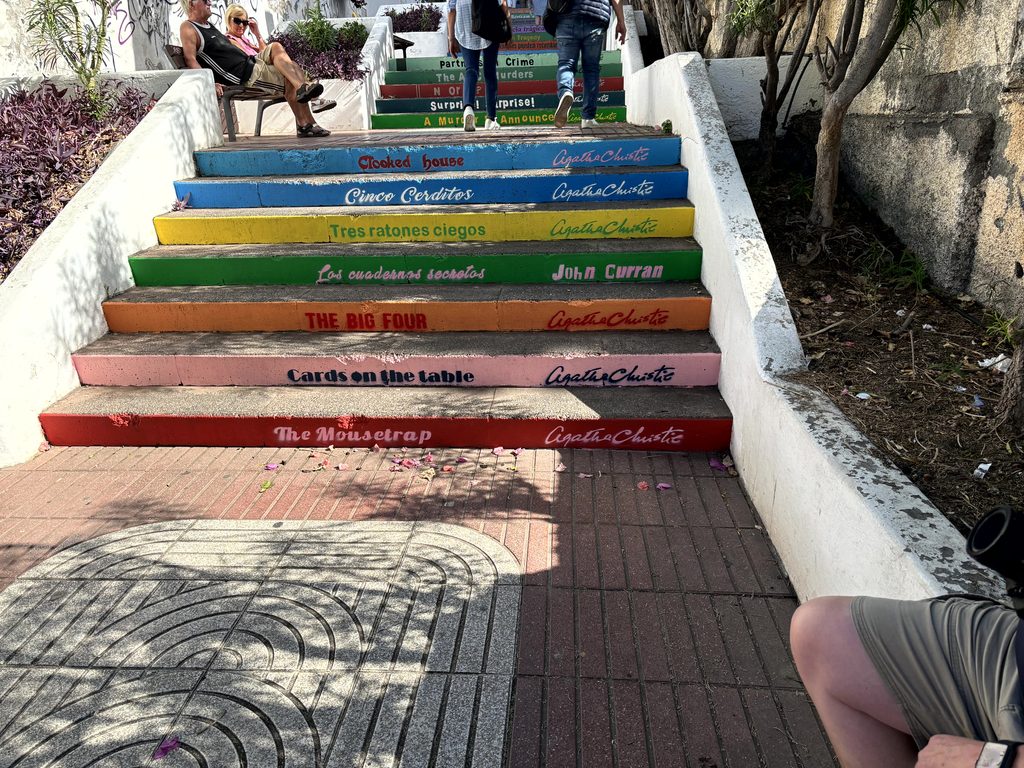
The Agatha Christie Steps. Jim loves Agatha Christie, and she spent time in Tenerife, so this was on our list. Each step is painted a different color with the title of one of her books. It’s quick to see, and it makes a really pretty photo.
Sitio Litre. We found this one while walking around town. It’s a garden filled with orchids, beautifully landscaped, and a lovely little excursion.
Walking Puerto de la Cruz. We walked a lot. The town is easy to explore on foot, and on a clear day Teide shows up in the background.
What I’d Add as Your Travel Advisor
We kept this trip short and simple. If you have more time, here’s what I suggest to clients. I haven’t done these myself, and I’ll always tell you when that’s the case.
Teide National Park. A UNESCO World Heritage site with a lunar-looking caldera and the Roques de García rock formations. A cable car runs most of the way up the peak. Reaching the summit crater takes a separate permit, which is free but limited, so check the official park site well ahead. Bring layers and take the altitude seriously.
Anaga Rural Park. The ancient laurel forest on the island’s northeast tip, with misty ridges and hiking trails.
La Orotava and La Laguna. Two historic towns known for their wooden balconies and colonial streets. La Laguna is a UNESCO site.
Whale and dolphin watching. Boat trips from the south coast look for the pilot whales and dolphins that live between Tenerife and La Gomera. Choose a licensed, responsible operator.
The Food to Look For
Canarian cooking has its own personality. Look for papas arrugadas con mojo (small salt-crusted potatoes with red and green sauces), gofio (toasted grain flour), fresh grilled fish, and wines from the islands’ volcanic soil.
Tenerife in January: What to Know Before You Go
Pick your base on purpose. The north (Puerto de la Cruz, where we stayed) is greener and has more old-town character. The south is sunnier and is where most whale-watching boats leave from.
Three nights is a taste, not the whole island. It was perfect for a beach break tacked onto Madrid. For Teide, Anaga, or the south coast, plan five to seven nights.
Check how many people the room really sleeps. On this same trip, our Madrid hotel took “two guests” literally. There was no rollaway for Aaron, and we had to book a second room. In Europe, confirm the occupancy for every person before you book.
Pack layers. The coast is mild, but the mountain is a different season.
Planning more of Spain? You might also like Luxury Spain Vacation for Couples and Multi-City Europe Planning Without the Stress.
The Trip in One Line
It was a whirlwind week: a few days of winter sun and black sand in Tenerife, then Madrid. It’s still one of my favorite ways to break up a January. If Tenerife is on your list, I’d love to help you build the version that fits you.
Karla Tugan
Owner & Travel Advisor | Whispering Willow Travel
Every Journey Writes a Story 🌿
FAQ: Tenerife in January
Yes. Coastal highs stay in the upper 60s to low 70s°F, rain usually comes as short showers, and crowds are lighter than in summer. Expect shorter daylight and cooler temperatures at elevation.
Layers. Beach clothes and swimwear for the coast, plus a fleece or light jacket if you plan to go up into Teide National Park. Comfortable walking shoes and sunscreen.
January is generally lower-priced than the July and August peak. From the US, expect at least one connection, usually through Madrid.
FAQ: Planning Your Tenerife Trip
Three nights is enough for a relaxed beach break in one town. Five to seven nights lets you add Teide National Park, Anaga, or a second base in the south.
Not if you’re staying in a walkable town like Puerto de la Cruz. If you want Teide, Anaga, or the Teno coast, a small rental car makes them much easier.
Yes. It’s beautifully landscaped, with shows, an aquarium, a strong penguin exhibit, and plenty of birds and animals. Plan most of a day.
Recently on the Blog
- How to Give a Trip as a Christmas Gift (and Make It Feel Real Under the Tree)
- What a Week in Ireland Really Looks Like: Our April 2026 Trip, Day by Day
- Tenerife in January: Black Sand, Winter Sun, and a Volcano on the Horizon
- Slow Travel in Italy: What Two Trips Taught Me About Naples, Sicily & Venice
- Before You Say Yes to a Hosted Ireland Trip: The 12 Questions I’m Asked Most
Karla Tugan is a travel advisor and the owner of Whispering Willow Travel. She specializes in guided Ireland and Alaska trips, is river cruise certified with AmaWaterways, Avalon, Viking, and Uniworld, and plans every itinerary from firsthand experience. She hosts a small-group Ireland journey in September 2027 and shares real, tested travel guidance at whisperingwillowtravel.com.
Whispering Willow Travel | Every Journey Writes a Story

LEAVE A COMMENT
Comments