
It’s exactly what I came home talking about.
In April 2026, my sister Kris and I spent nine nights driving clockwise around the whole island, from Dublin down to Cork and Kerry, up the west coast, across the north, and back to Dublin. Kris drove every single mile. I didn’t drive once, and I’ll tell you why that matters in a minute.
It was a research trip for the small hosted group I’m taking to Ireland in September 2027, so I took notes on everything: what delivered, what didn’t, and what I’d do differently. If you’ve been wondering what a week in Ireland really looks like, here it is, stop by stop, in the order we traveled.

A narrow road hugging the coast on the Dingle Peninsula, with a stone wall on one side and the Atlantic on the other. My sister drove every mile of it.
Dublin, Day One: The Day Nothing Went to Plan
Our very first day was a lesson. We rushed through the Guinness Storehouse, then missed the city tour we had reserved. So we pivoted: the Jameson Distillery, a little shopping, and a pub with a live band where we planned to stay for one drink.
We stayed much, much longer than one drink.
The lesson I now give every client: reconfirm your tours and reservations 24 to 48 hours ahead. (Don’t worry, we made up that missed tour at the end of the trip. Keep reading.)
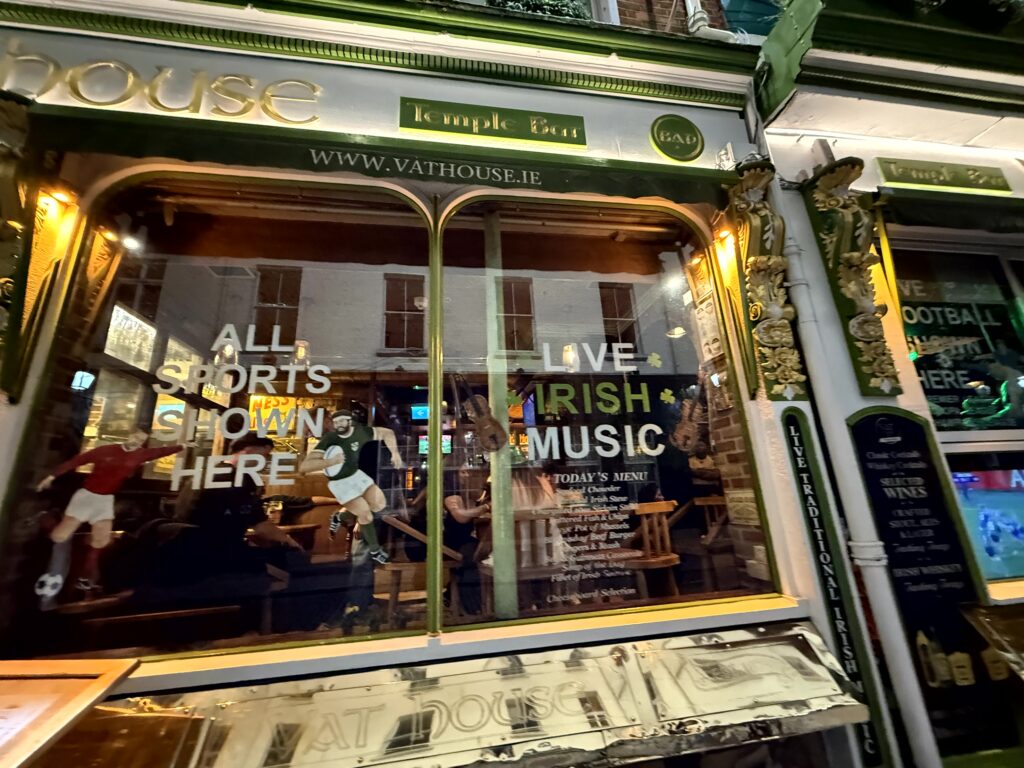
Live Irish music and a full house at the Vat House in Dublin’s Temple Bar.
Kilkenny: A Brewery Tour for Two
At the Smithwick’s brewery in Kilkenny, almost nobody else showed up that day. So it was just Kris, me, and a young guide who knew her stuff. A private tour, for about €15 to €20 each. We also saw Kilkenny Castle before moving on.
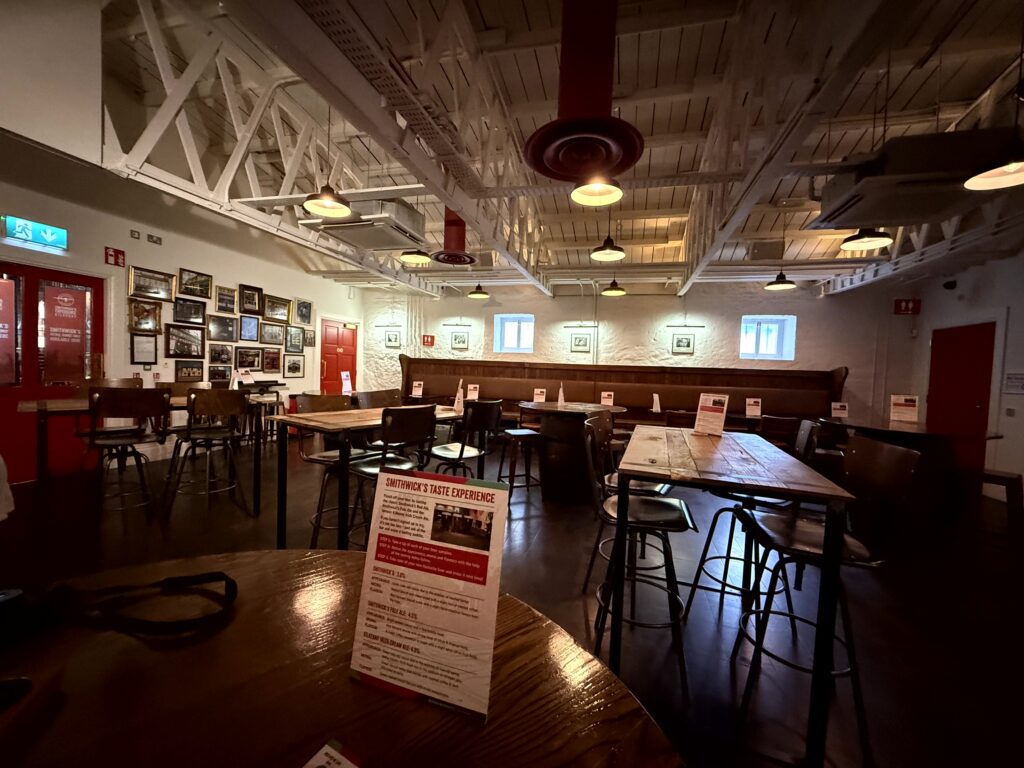
The tasting room at the end of our Smithwick’s tour in Kilkenny. Nobody else showed up that day, so it was just my sister, me and our guide, with the whole place to ourselves.
Cork and Blarney: The Stone We Didn’t Kiss
We stayed at Castlemartyr Resort outside Cork, where old castle ruins sit right on the grounds and a shuttle takes you into town.
Then Blarney Castle. Confession: neither of us kissed the stone. I was afraid of falling, and Kris got dizzy. But standing in that line, we met Kylie from Colorado, who was traveling Ireland on her own. I filmed her kiss. Then we ran into her three more times over the next few days.
Ireland is like that. The island feels big until it doesn’t.
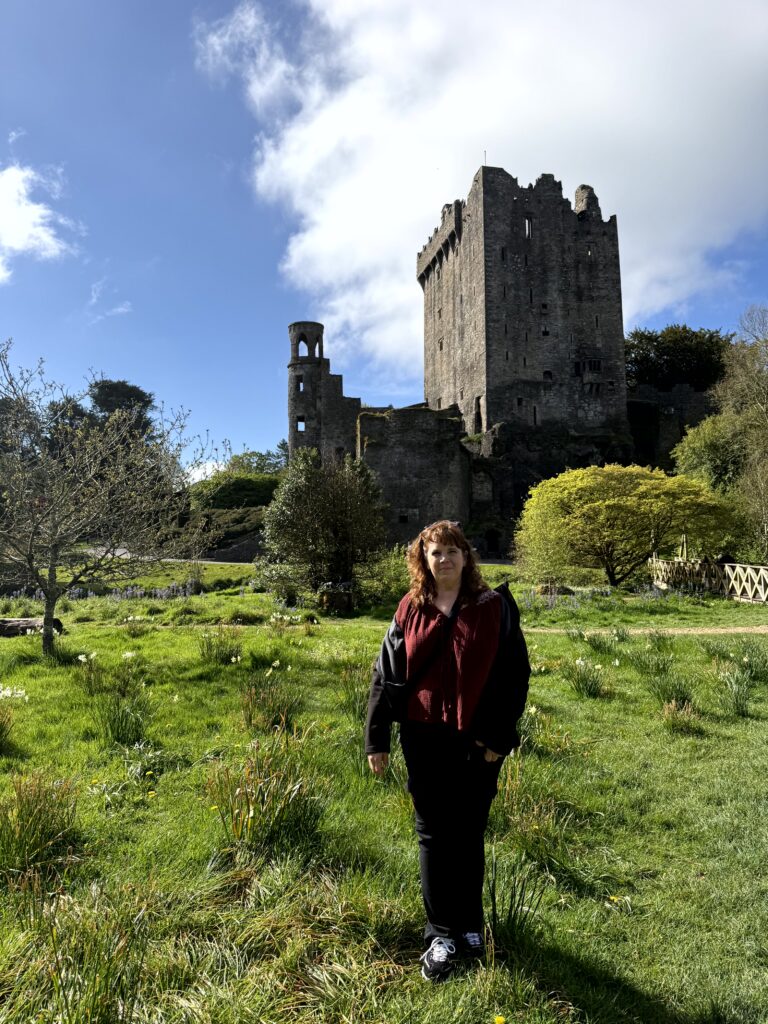
Blarney Castle in April, with spring daffodils all over the grounds. Neither my sister nor I kissed the stone, but that’s a story for another day.
Killarney: A Lake View and New Friends
The Lake Hotel in Killarney gave us a suite with a lake view and a jacuzzi tub.
That night we met two friends from Georgia, neighbors traveling together, one with Irish ancestry. We ended up deep in a conversation about Irish and Northern Irish history, and we’re Facebook friends now.
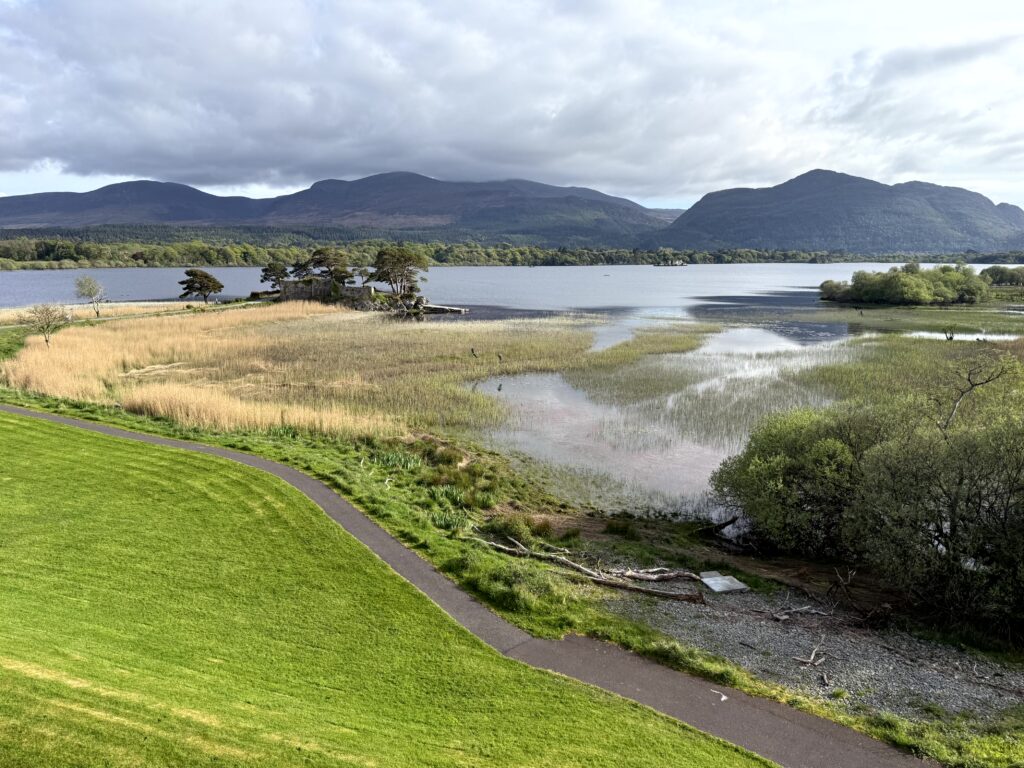
The view from our room at The Lake Hotel in Killarney, looking across the lake to an old castle ruin and the mountains beyond.
The Gap of Dunloe: Hard Seats and Tired Horses
We took a jaunting car (a horse-drawn cart) through the Gap of Dunloe, sharing it with a couple we didn’t know. The seat was hard wood. Our driver barely said ten words the whole way, so the hard seat did all the talking.
It was a very hot day, and the horses overheated and had to stop three times. Each time, we got out and walked uphill for 20 to 30 minutes.
Afterward came about an hour on a boat through the rivers, with a captain who was hilarious and incredibly knowledgeable. That full day at the Gap is also why we ran out of time for the full Ring of Kerry.
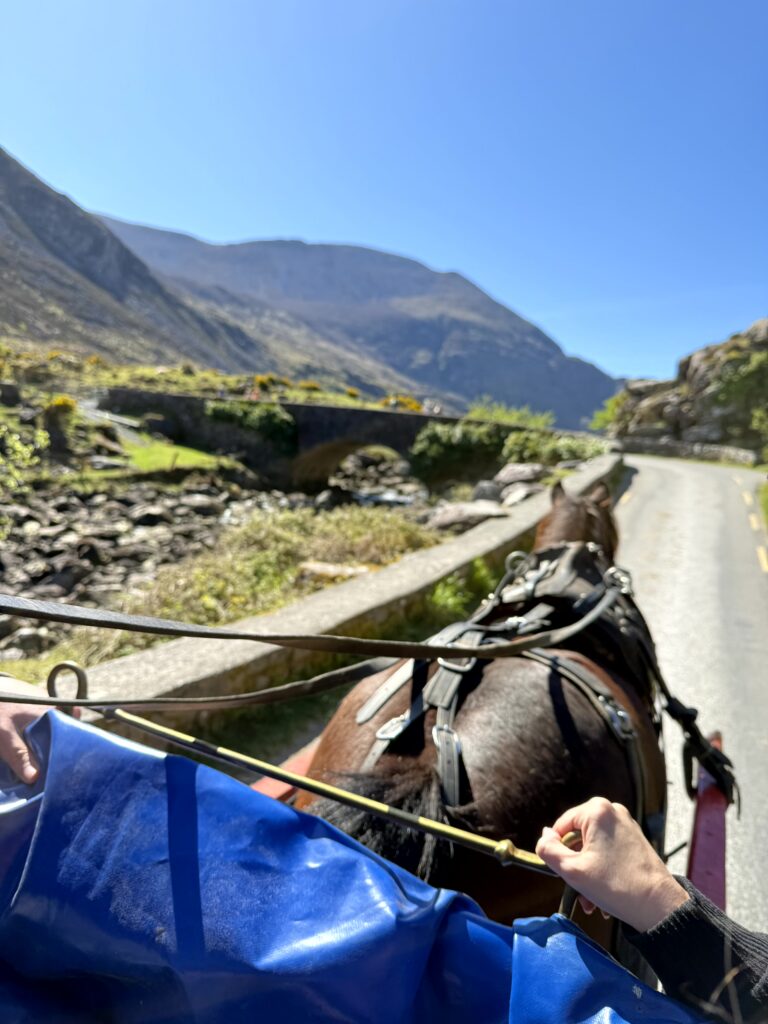
The view from our jaunting car in the Gap of Dunloe: a hard wooden seat, a quiet driver and a very hot April day. The horses needed three breaks, so we walked the steep hills beside them, and it was still one of my favorite days of the trip.
Kerry Cliffs: Forty-Five Minutes Before Closing
So we made a call. We skipped most of the rest of the Ring of Kerry drive and headed straight for the Kerry Cliffs, arriving about 45 minutes before closing.
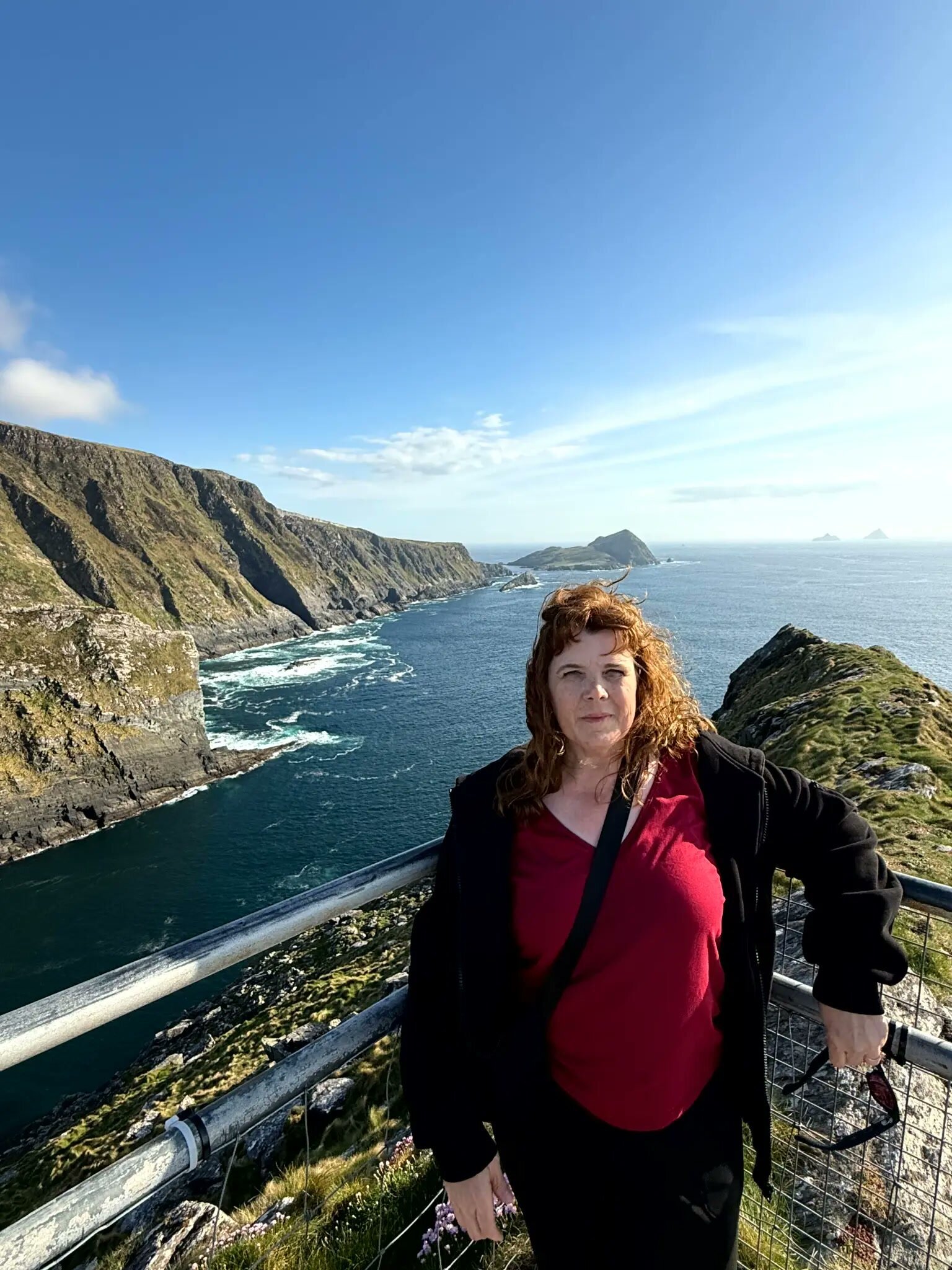
Fewer than a dozen people were there. The clifftop wind pushed at our jackets, the sky was clear, and the Atlantic just kept going. It was one of the best moments of the trip, and it happened because we got there late.
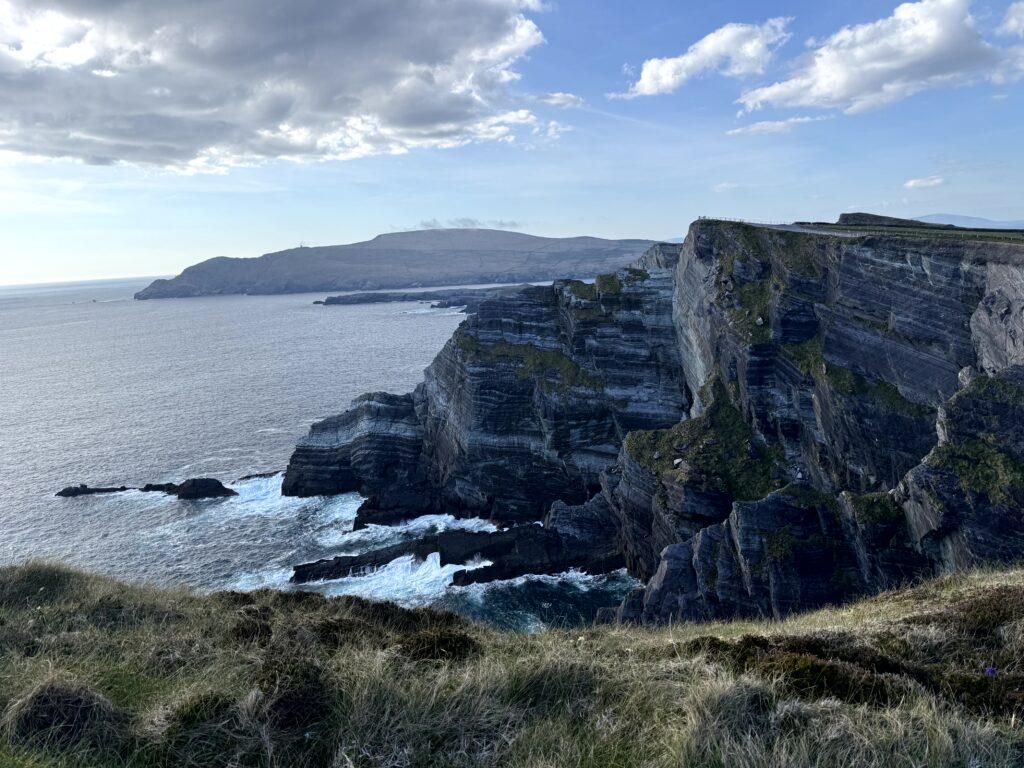
The Kerry Cliffs, about 45 minutes before closing. We skipped most of the Ring of Kerry to get here in time, and there were only about a dozen people. Windy, clear, and worth every skipped stop.
Dingle and Slea Head: Lambs, a Beach, and the Best Fish and Chips
On the Slea Head Drive, we stopped at a roadside farm where you could feed baby lambs and alpacas. Kris held and bottle-fed an injured lamb.
Nearby, we walked Coumeenoole Beach, where the film Ryan’s Daughter was shot. Then into Dingle town for the best fish and chips of the entire trip.
In a Dingle pub that night, a man stood up and sang without a microphone, and the whole room went quiet to listen.
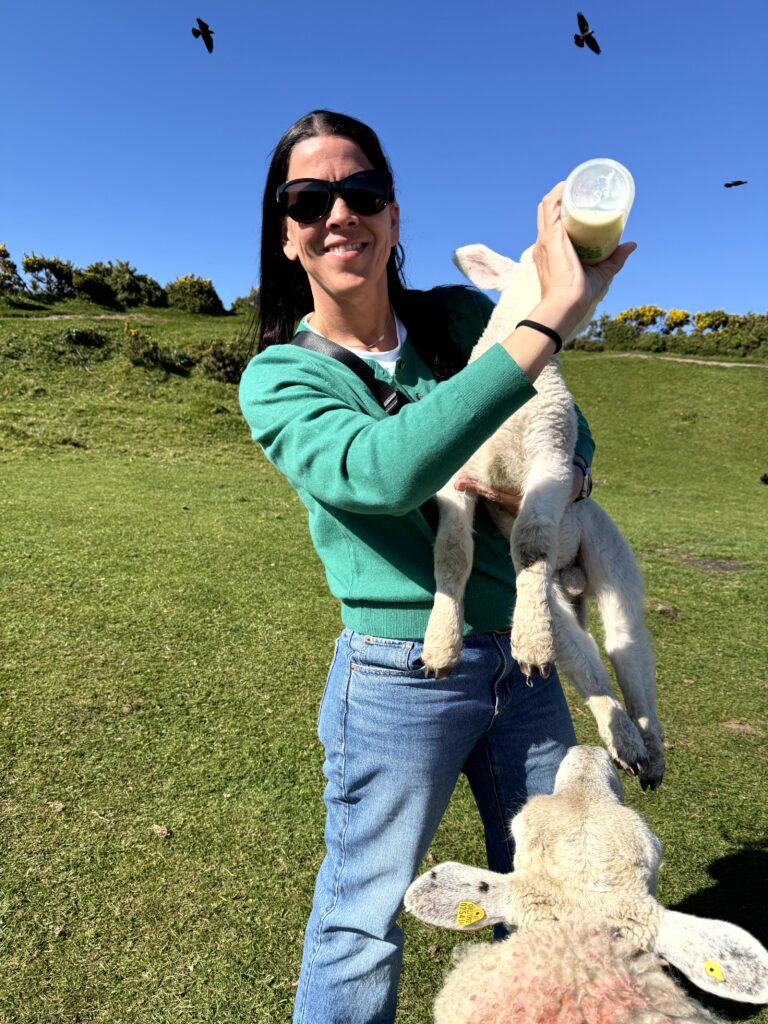
My sister, Kris, bottle-feeding a lamb at a roadside farm on Slea Head. Holding the baby lambs was one of my favorite parts of the whole trip.

Coumeenoole Beach near Slea Head on the Dingle Peninsula, where the film Ryan’s Daughter was shot. Golden sand, turquoise water and green fields stitched together with stone walls.
Doolin and the Cliffs of Moher: The Zipper
We pulled into the car park at the Cliffs of Moher in mist and light rain. I went to zip up my raincoat and discovered the zipper was broken. Right there, right then.
We walked out to the cliffs anyway, broken zipper and all.
In Doolin, we found a tiny trad music pub with about a dozen people inside and no tourists but us. That’s the kind of evening you can’t plan for.

Hood up at the Cliffs of Moher. It was misty and lightly raining, and I found out in the car park that my raincoat zipper was broken. I’d stand here again in a heartbeat.
Galway: The Ring I Brought Home
In Galway, I bought my Claddagh ring, the traditional Irish design of two hands holding a crowned heart.
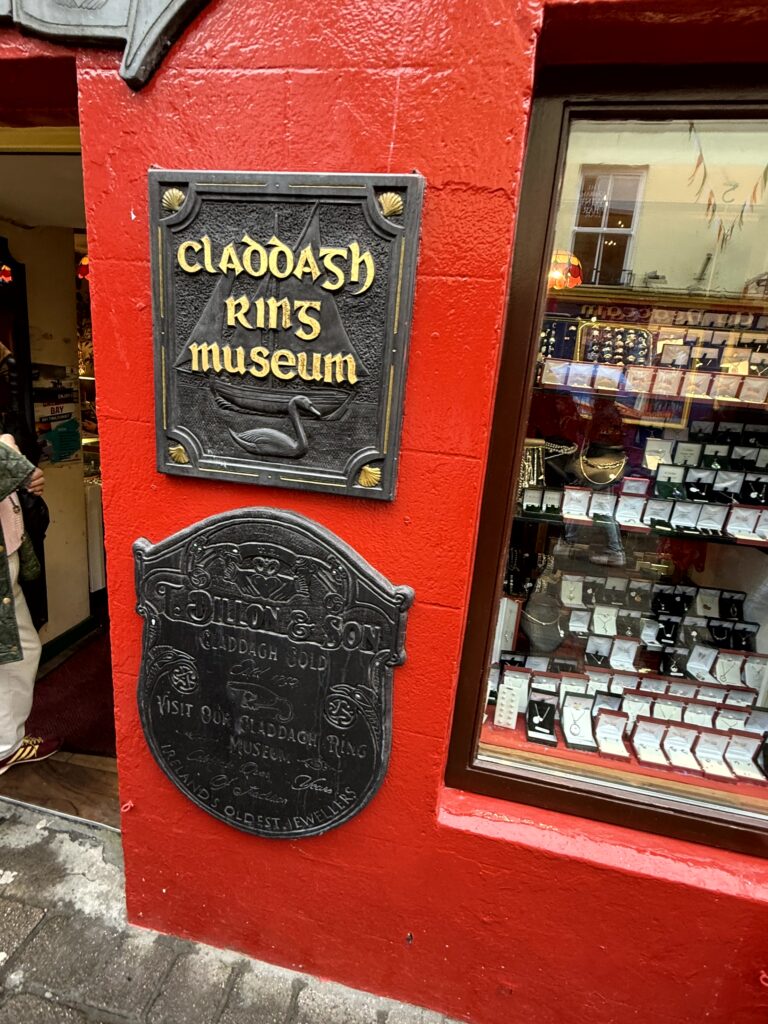
Thomas Dillon’s Claddagh Ring Museum in Galway, making Claddagh rings since 1750. This is where I bought my silver Claddagh ring, still my favorite thing I brought home from Ireland.
North to Donegal and the Causeway Coast
From Galway we kept heading north, through Donegal and up into Northern Ireland.
The Carrick-a-Rede rope bridge gave us our second rainy day. On the way back after crossing, the sky opened up into a full downpour. I had a proper rain jacket on this time and still got soaked to the skin.
Dunluce Castle is a dramatic ruin right on the cliff edge. And the Giant’s Causeway is about 40,000 hexagonal basalt columns stepping down into the sea. We finished the north with the Titanic Experience in Belfast.

Stepping across the Giant’s Causeway in Northern Ireland, about 40,000 basalt columns that fit together like a honeycomb. Wear real shoes; the stones are uneven and slick near the water.
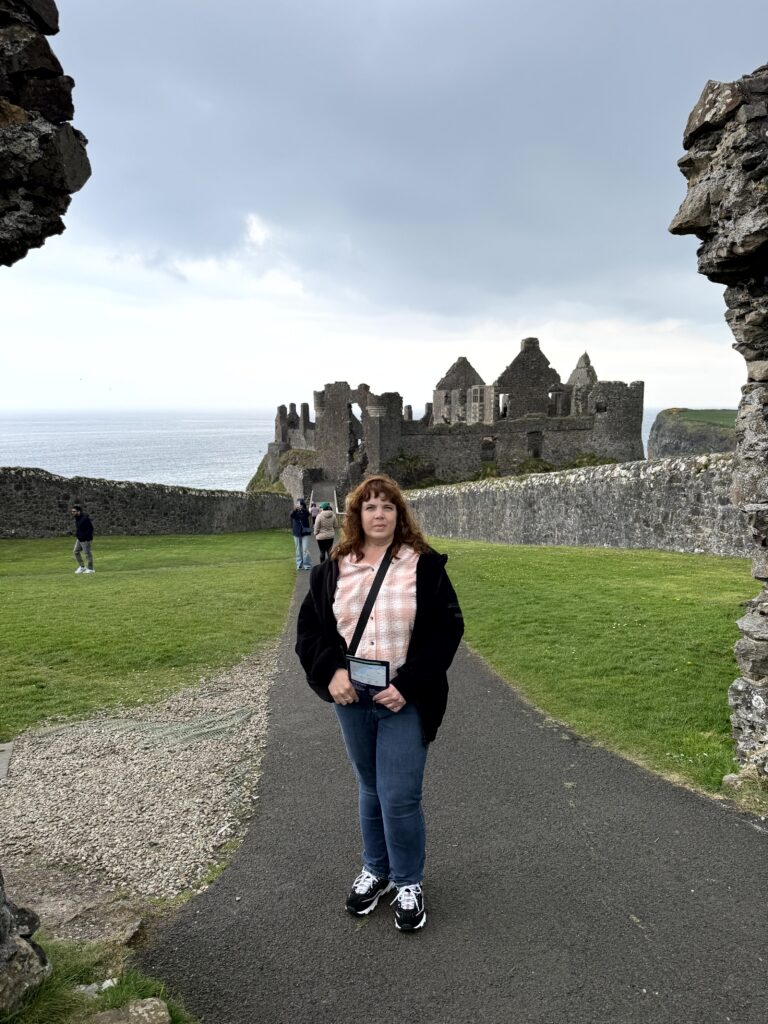
Dunluce Castle on the Causeway Coast, a ruin perched right on the cliff edge above the sea.
Back to Dublin: The Tour We Missed
Remember the city tour we missed on day one? We circled back to Dublin at the end and finally took it. We had a great guide, and we saw the Book of Kells and the Long Library at Trinity College.
Our last stay was Clontarf Castle Hotel, a real castle with the common areas in the original structure and the rooms in a newer wing. It was probably the prettiest interior of all the hotels we stayed in.

The Long Room at Trinity College in Dublin, where we went with the city tour we’d missed on day one, along with the Book of Kells. Go early, because it fills up fast.
A Few Stops We Squeezed In Along the Way
Rock of Cashel at golden hour. We got there too late to tour the inside, and we skipped nearby Hore Abbey to save the fading light. Below the Rock, we found a fenced field full of grazing sheep, and that’s where I took some of the best photos of the trip.
Adare. One of the prettiest little villages on our whole route.
Kinsale and Torc Waterfall. Both were part of our route through the south.
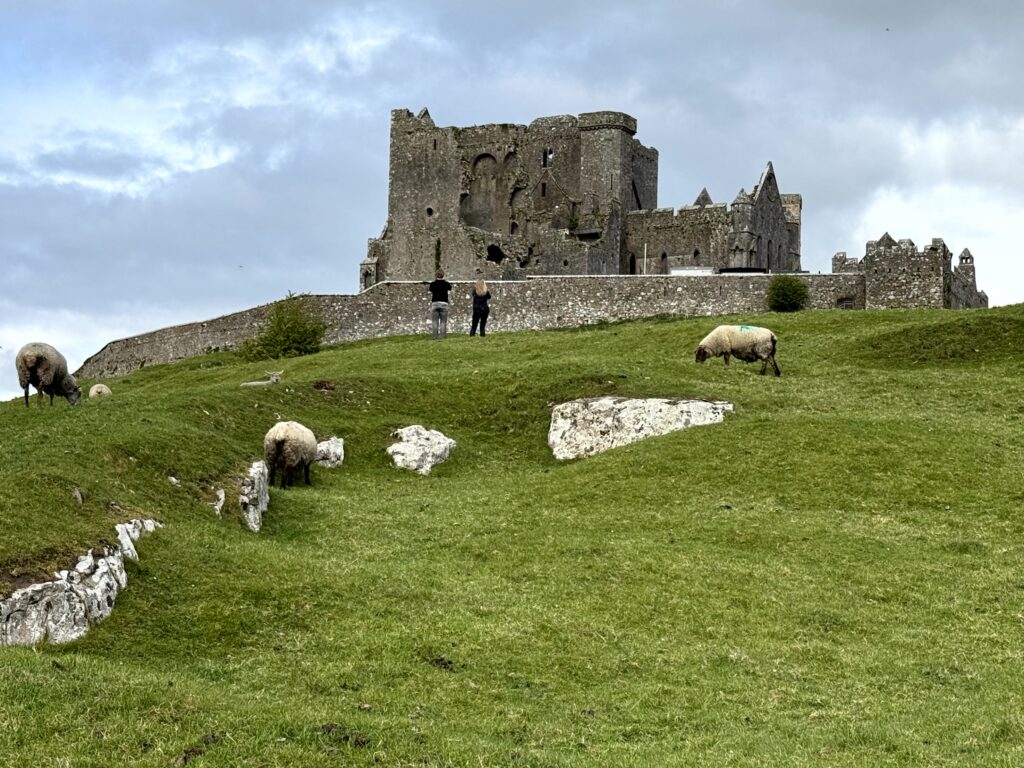
The Rock of Cashel, with sheep grazing on the hill below. We got there too late to go inside, so we wandered the field below instead and got some of my favorite photos of the whole trip.
What I’d Tell You Before Your Own Week in Ireland
- Decide who’s driving before you go. Ireland drives on the left, often on narrow roads. Kris did every mile of ours. If nobody in your group wants that job, plan around it.
- Reconfirm everything 24 to 48 hours ahead. Our missed Dublin tour taught me that one.
- Go late to the famous places. Kerry Cliffs and the Rock of Cashel were at their best near closing time.
- Test your rain gear at home. Check the zipper. Trust me.
- Leave room for the day that runs long. The Gap of Dunloe took all day.
I put even more of this into my free Ireland guide, my free Ireland guide. It’s 12 pages of what I learned, the good and the “I’d do that differently.” And if you’re dreaming about a first trip, my earlier post on planning your first trip is a good place to start.
Where This Trip Led: Ireland 2027
I came home from this trip knowing exactly what I want for my travelers: all of the good parts, and none of the driving.
From September 24 to October 3, 2027, I’m hosting a small group in Ireland, Dublin to Dublin. Several places from this trip are on our route: Dublin, Kilkenny, Blarney, two nights in Killarney, the Ring of Kerry, the Dingle Peninsula and Slea Head, the Cliffs of Moher, and two nights in Galway.
And there are places on the 2027 route I haven’t seen yet, like Kylemore Abbey, Connemara, and the Aran Islands. I’ll be seeing those for the first time right alongside you.
A few favorites from this post, like the Smithwick’s tour and the Rock of Cashel, aren’t on the 2027 route, so I won’t promise them. What I can promise: the hotels are chosen, a coach does the driving, breakfast is waiting every morning, we share several dinners together, and I’m with you the entire trip.
If Ireland has been on your list for years, take a look at my 2027 hosted trip. Seats are limited. And if you’d like to talk it through, you can schedule a complimentary consult with me anytime.
Want more stories like this in your inbox? Join my Story-Worthy Travel Inspiration newsletter.
Frequently Asked Questions
Is a week enough time to see Ireland?
A week gives you a real taste. Kris and I spent nine nights and made it around the whole island, but some days felt rushed, and we ran out of time for the full Ring of Kerry. If it’s your first trip, pick one region or let someone else handle the route so you’re not spending your week behind the wheel.
Should I drive in Ireland?
Only if someone in your group is comfortable driving on the left, often on narrow roads. On my trip, my sister drove every mile. A hosted or guided trip takes the driving off the table entirely.
What is the weather like in Ireland in April?
Mixed. In nine nights we had two rainy days (mist at the Cliffs of Moher and a downpour at Carrick-a-Rede), a hot, sunny day at the Gap of Dunloe, and a clear, windy evening at the Kerry Cliffs. Pack layers and a rain jacket you’ve tested.
What is the Ireland 2027 hosted trip?
It’s a small-group trip I’m hosting from September 24 to October 3, 2027, starting and ending in Dublin. Hotels, a coach, breakfasts, several dinners, and sightseeing are included, and I travel with the group the entire time. Details are at whisperingwillowtravel.com/ireland2027.

LEAVE A COMMENT
Comments