
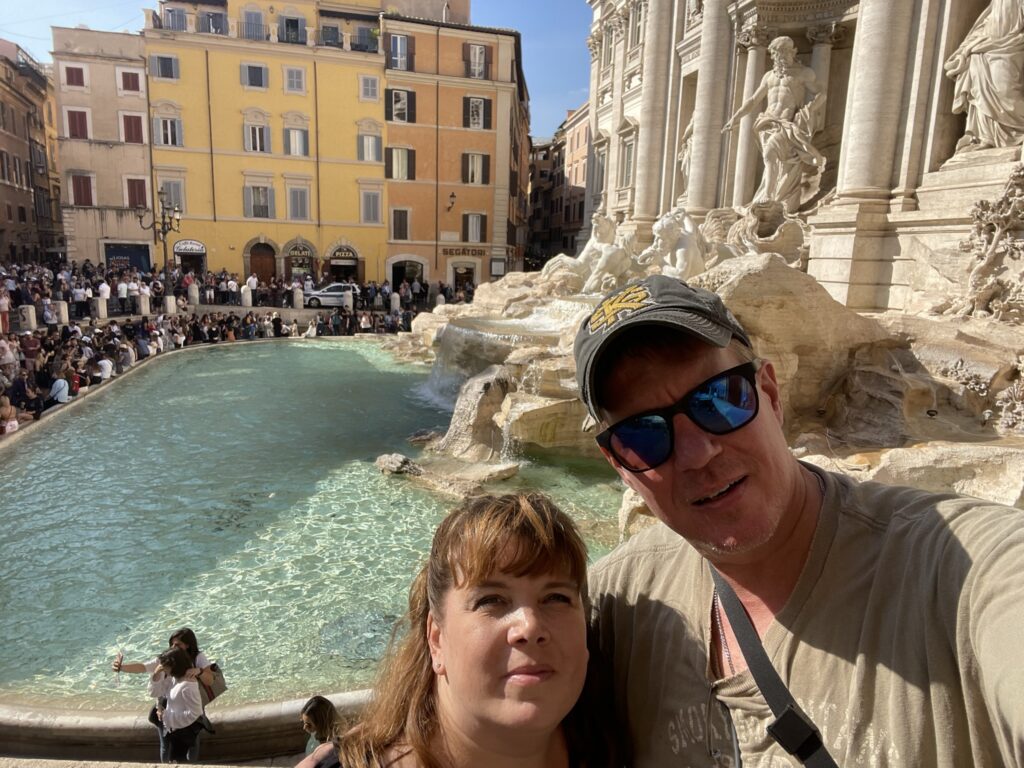
If you are building a Rome and Florence itinerary and want to know what is actually worth your time, this post is for you. This is Part 2 of our Italy and Paris 27th anniversary trip series. It covers the heart of our journey. Several days each in Rome and Florence. A Tuscany day trip through Siena, San Gimignano and Pisa. And an evening at a Tuscan farmhouse that I still think about.
Part 1 covered the beginning of our journey through Naples and the Amalfi Coast. This post is where things really got deep for me. Rome and Florence are two cities I had always wanted to see, and I want to tell you what they were actually like, not just the highlights reel. Because as a travel advisor, I think honest information is the most valuable thing I can give you.
Rome Travel Tips: What to Know Before You Go
I want to set honest expectations, because I wish someone had set mine.
Rome is a lot dirtier than I expected. There was more trash in the streets and more graffiti than I had imagined. If you are going in with a perfectly polished, postcard-pretty image in your head, you will want to adjust that expectation a little.
That said, it is still incredibly charming and has so much history to offer that it almost does not matter. Once you get past the initial surprise, you really start to appreciate how alive the city feels. There is nowhere else on earth quite like it. Every block you walk, you are surrounded by thousands of years of history, and eventually that starts to work on you in a way that is hard to describe.
The areas we loved most were the neighborhoods around the Vatican and the winding, ivy-covered streets of Trastevere. Both are now on my must-recommend list for every Rome itinerary I put together for clients.
🌿 Travel Tip: Do not try to see everything in Rome in a day or two. Give yourself at least four nights so you can move at a pace that lets you actually absorb where you are rather than just checking things off a list.
Rome and Florence Itinerary: Where to Stay – Two Hotels, Two Very Different Experiences
One of the best decisions we made was splitting our Rome stay between two different hotels. We stayed at The Tribune for the first two nights and the Waldorf Astoria for the last two. I’d recommend this approach to anyone spending four or more nights in Rome.
The Tribune Rome
For our first two nights, we stayed at The Tribune, located near the Borghese Gardens and the Spanish Steps. I want to be clear that this was not just a practical choice. It was a genuinely wonderful hotel in its own right.
The design is modern and sleek with a lot of personality, which is a completely different vibe from what you might expect in Rome. We were upgraded to a beautiful room that had a freestanding soaking tub and a big walk-in shower, which felt like such a nice treat after long days on our feet.
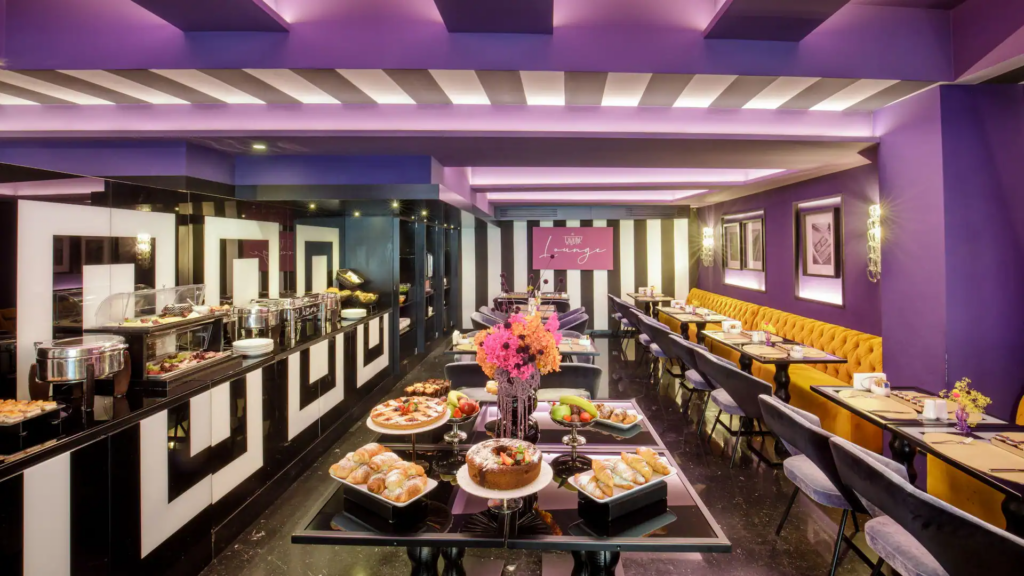
The Tribune Lounge was stunning. Bold colors, gold velvet seating, fresh flowers everywhere and a beautiful breakfast spread that honestly looked like something out of a magazine. It had a lot of personality and I loved it.
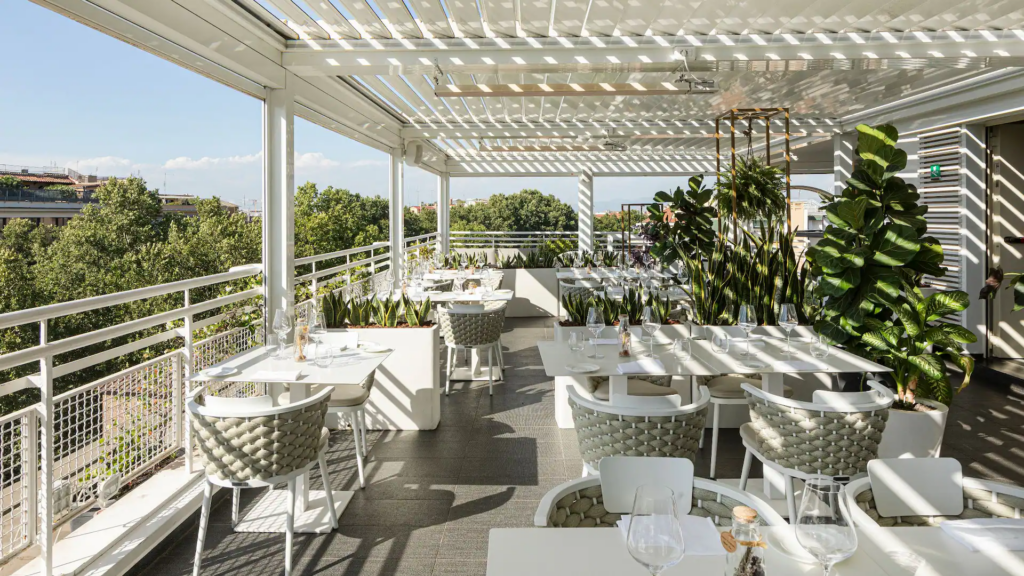
The rooftop restaurant was really something special. Open air, covered with lush greenery, crisp white furniture and beautiful views over Rome. We sat up there longer than we planned, which is always a sign that a place is doing something right.
The location did exactly what we needed for those first two days. We were close enough to the Spanish Steps and the Borghese Gardens to get our bearings in the city without relying on taxis every time we wanted to go somewhere.
The Waldorf Astoria Rome
The Waldorf Astoria ended up being my favorite hotel of the entire trip. I loved everything about it.
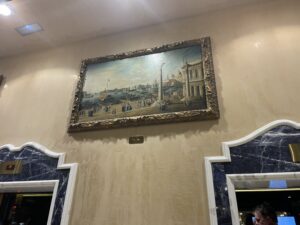
Walking through that hotel felt like walking through a museum. Every hallway had antiques and original paintings on display and I genuinely found myself wandering the corridors just to look at things.
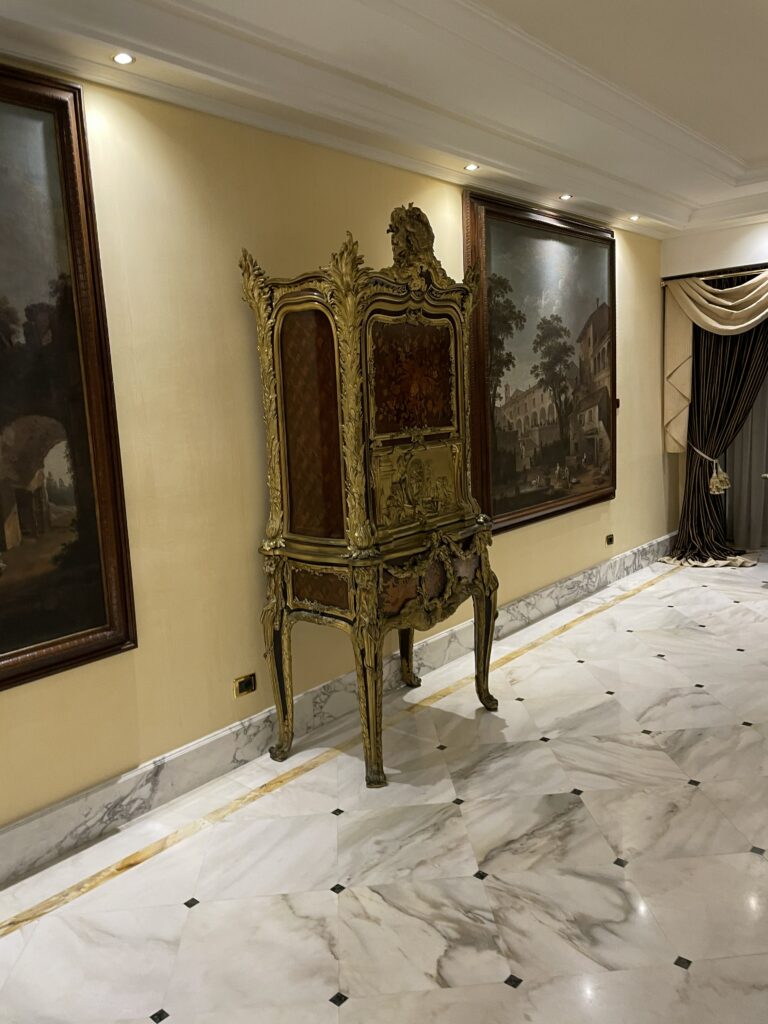
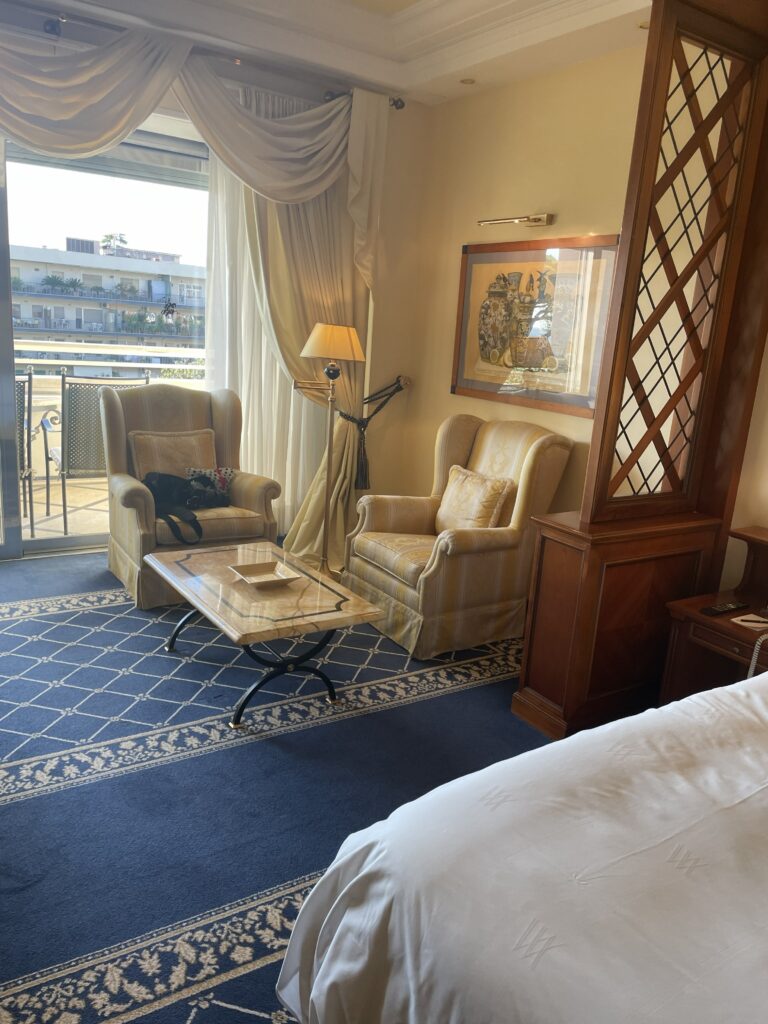
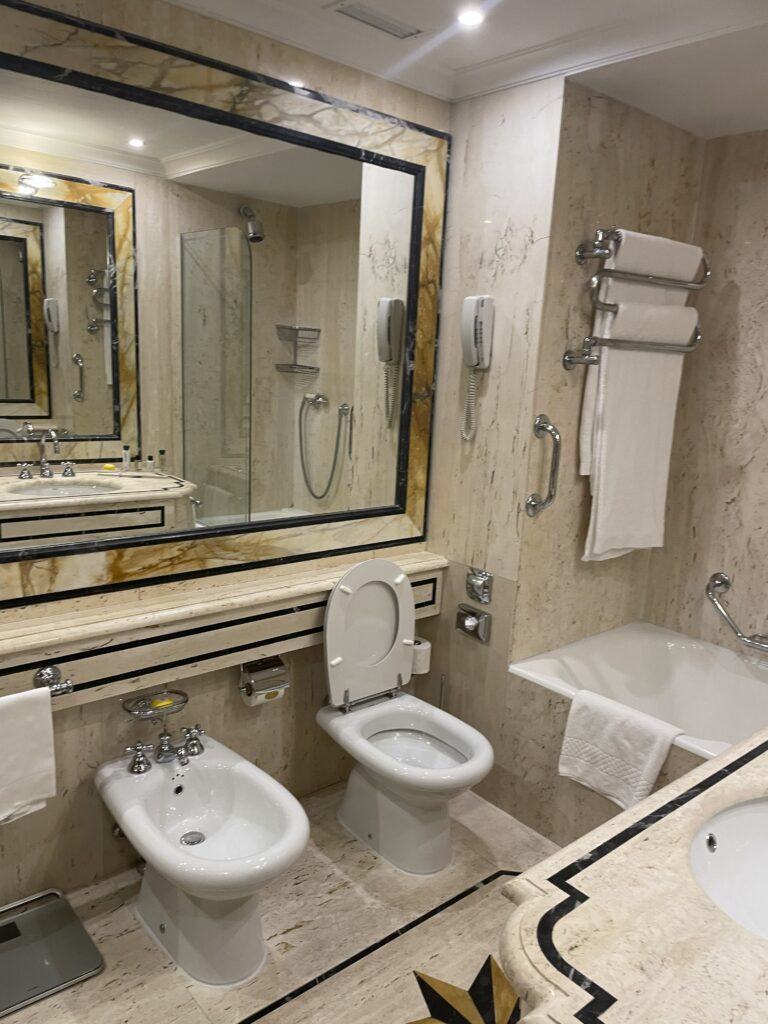
The rooms were large and really beautiful. The bathroom was especially impressive with marble everywhere and gold fixtures throughout. I think about that bathroom more than is probably reasonable.
Breakfast at the Waldorf was one of the best I have seen anywhere. They had all kinds of food and drinks and even had a real honeycomb out for their honey. Not a little jar of honey. An actual honeycomb. That is the kind of detail that tells you exactly what kind of hotel you are staying in.
They also had an indoor pool with a fountain in the center, which was really cool. We swam there one evening to relax and it was exactly what we needed after a full day of sightseeing.
The one thing to know before you book is that the Waldorf is not close to the main tourist spots, so you will either need to walk a lot or take cabs. It also sits on a hill, so when you come back at the end of the day you have to climb a staircase of around 100 steps or more to get back to the entrance.
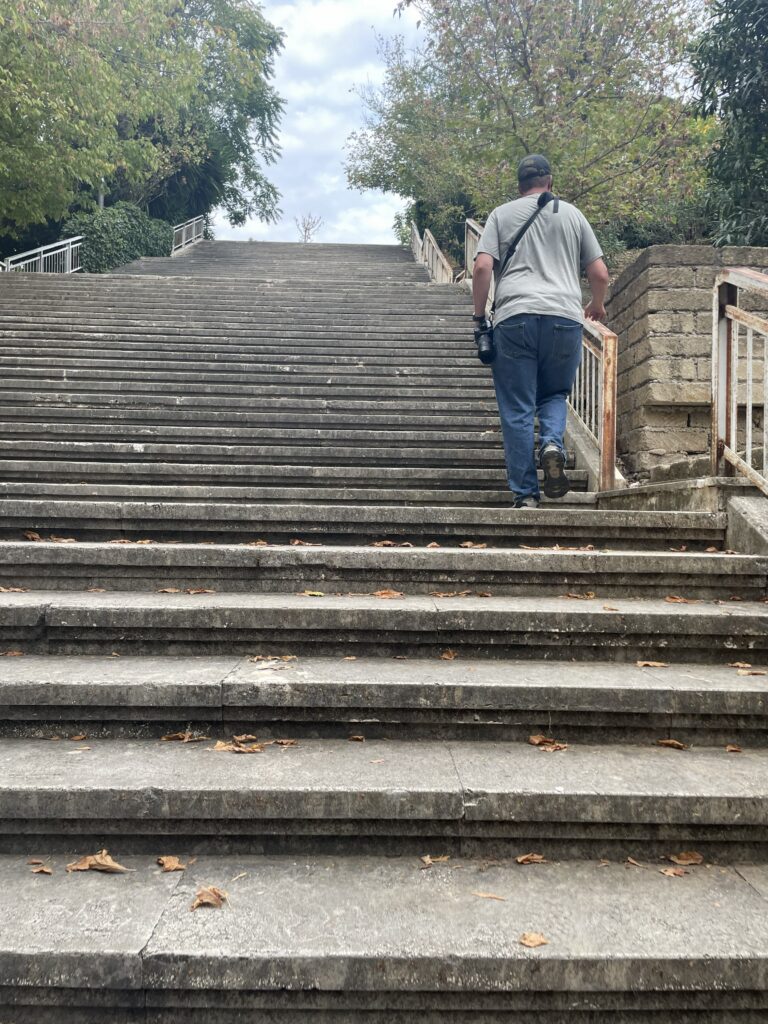
Jim handled it just fine. I had some thoughts about those stairs that I will keep to myself.
Was it worth it? Absolutely. Just go in knowing what to expect.
🌿 Travel Tip: This two-hotel approach is something I now recommend to clients planning a Rome and Florence itinerary who want both convenience and a luxury experience. You get the convenience early on when you are freshest and most eager to explore, and then you get to really settle in and enjoy the luxury experience once you have found your footing in the city. Whether you are building a Rome and Florence itinerary for a honeymoon, anniversary or bucket list trip, this approach works really well.
Rome Italy Itinerary: What We Did
The Colosseum and Ancient Rome
We took a guided tour of the Colosseum along with the Roman Forum and Palatine Hill. Jim absolutely loved it. He loves history and always has, and watching him walk those 2,000-year-old streets was one of those quiet moments of this trip that I will always hold onto. Having a knowledgeable guide made all the difference in helping us understand what we were actually looking at rather than just standing in front of old things.
The Trevi Fountain and the Vicus Caprarius
Of course we went to see the Trevi Fountain. It is crowded but it is still worth it. What really surprised us though was what is underneath it.
The Vicus Caprarius is also called the City of Water. It is an ancient Roman site discovered beneath the fountain in the 1990s during cinema construction. You go down into it and walk on catwalks above the excavated ruins. It is moody and atmospheric and genuinely fascinating, and most people walk right past it on their way to the fountain above.
It has become one of my top recommendations for every client who visits Rome. We also visited the Spanish Steps and spent a lot of time just walking around the city, which honestly ended up being one of our favorite things to do.
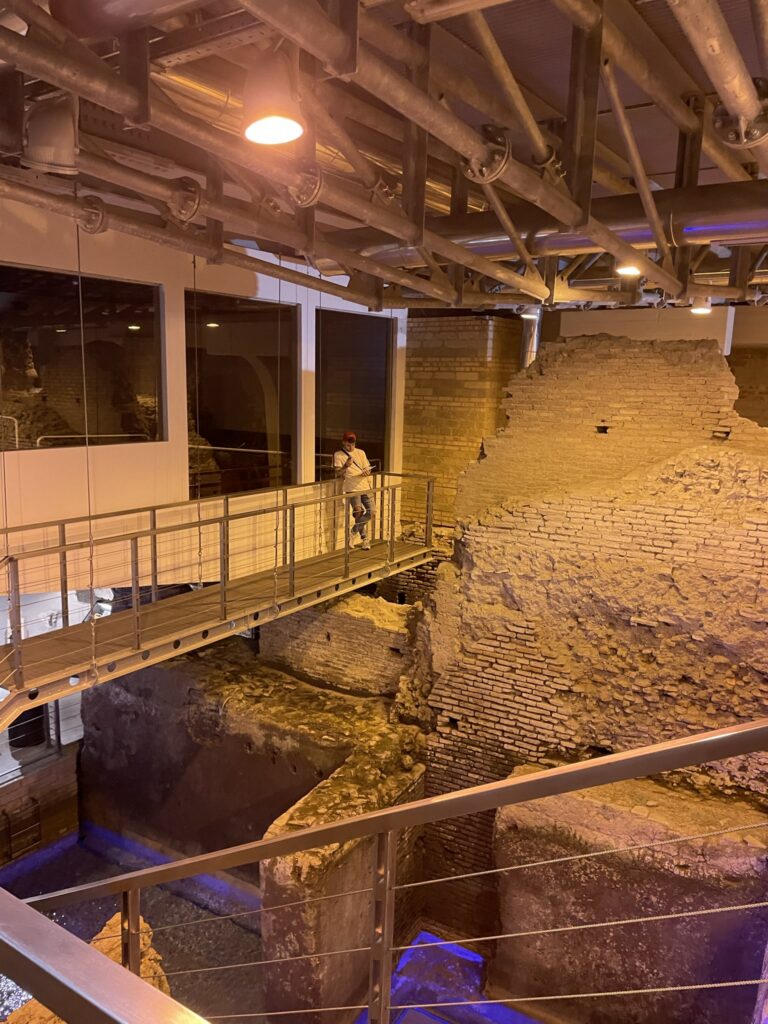
🌿 Travel Tip: Since our visit, Rome has introduced a €2 ticket (roughly $2.35) to descend to the fountain’s edge during daytime hours. You do not need to book in advance — tickets can be purchased on-site or online at fontanaditrevi.roma.it — but it is worth knowing before you go. Viewing the fountain from street level above remains free. After 10 p.m. the barriers open and access is free for everyone, so if you want the iconic shot without the crowds or the fee, an evening visit is a great option.
The Trastevere Food Tour
This was one of the best experiences of the entire trip and I want to give it the space it deserves.
In Part 1, I mentioned the Trastevere food tour briefly, but let me tell you more about it here. We did a small group evening tour through the neighborhood with our wonderful host Kopal. Trastevere is one of those neighborhoods that pulls you in immediately. Cobblestone streets, warm lighting, a very local feel that is a world away from the tourist-heavy center of the city.
The tour took us through a traditional deli, then supplì which are Roman fried rice balls, then pizza, fresh pasta, and a stew with what was honestly the best glass of wine I had on the entire trip. We finished with gelato and Kopal taught us exactly how to spot authentic gelato versus the tourist trap versions. I have used that knowledge every time I have been in Italy since.
At one point we went down into an underground cellar beneath a neighborhood restaurant that is actually older than the Colosseum. That neighborhood has been lived in for over 2,000 years. The evidence was literally beneath our feet.
I came home and started recommending this tour to every single client heading to Rome. It is now a standard part of any Rome itinerary I put together. You really cannot replicate that kind of experience on your own.
“Rome layers history on top of history until your mind can barely hold it all. And just when you think you have seen it, you discover there is an entire ancient world hiding underneath the streets you are already walking.”
Rome and Florence Itinerary: The Vatican
I was raised Catholic and Jim and I were married in a Catholic church, though we are no longer practicing. The Vatican was something I had always wanted to see and visiting it was a deeply personal experience for me.
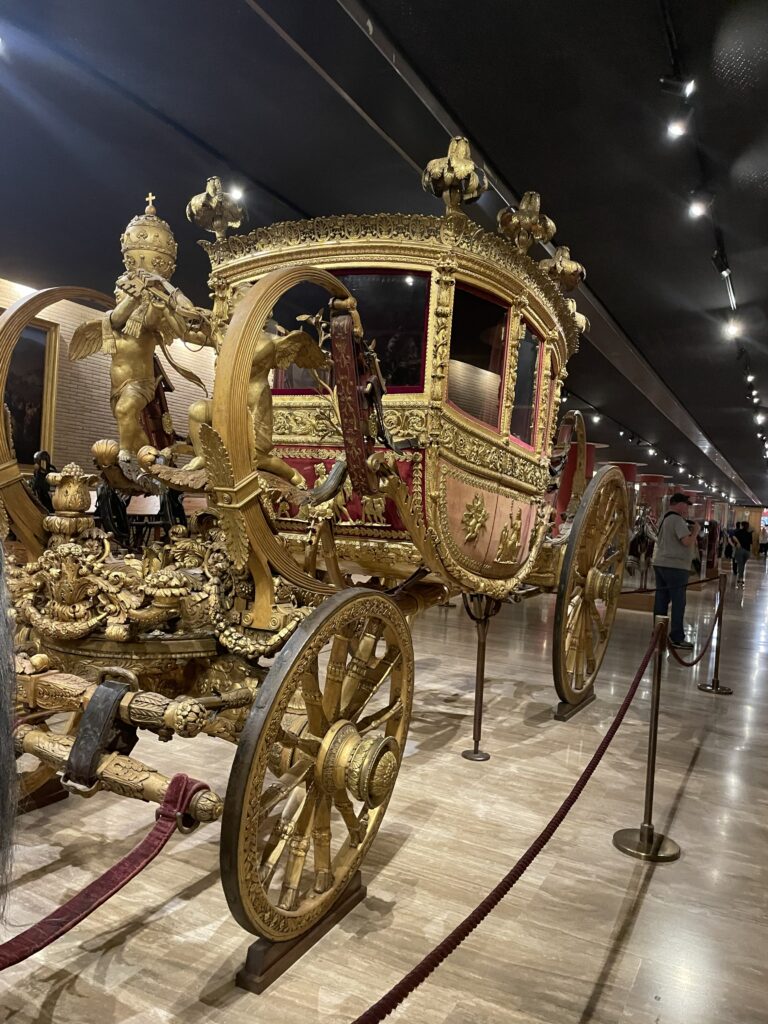
The Vatican Museums alone could take a full day. We saw the collection of papal carriages, which were just extraordinary. Elaborate gilded coaches covered in gold and sculptural detail that seems almost impossible to believe a human being actually made.
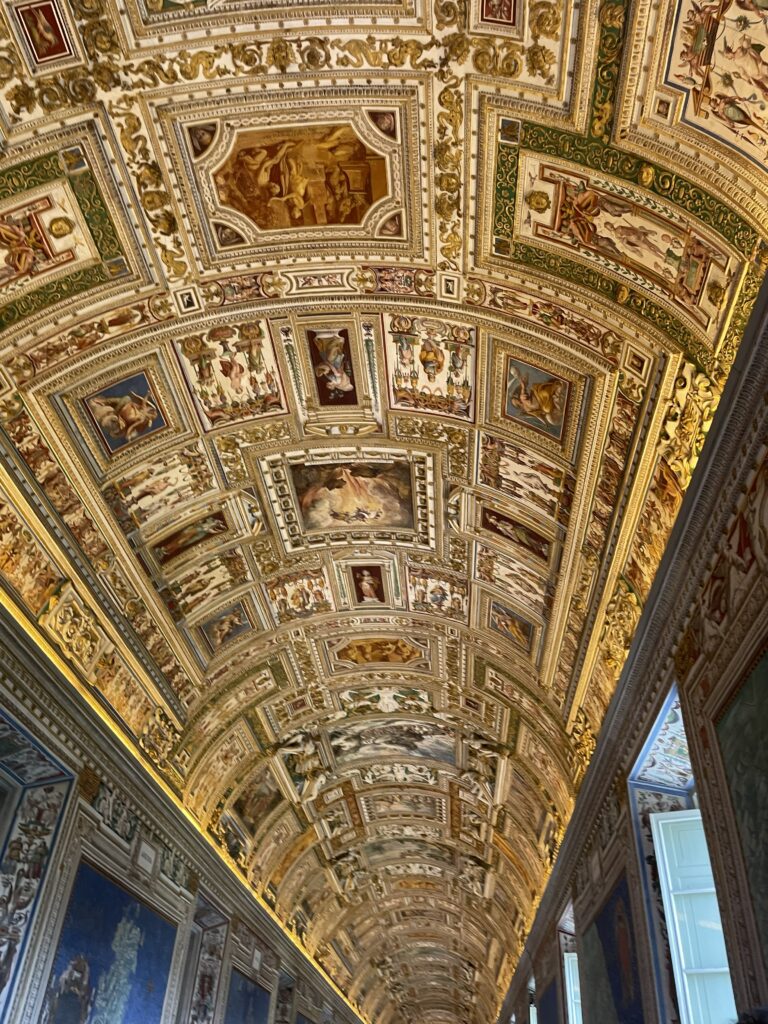
The ceilings throughout the buildings were some of the most beautiful things I have ever seen. The Gallery of Maps was especially amazing. Every inch of that ceiling is painted and decorated and you spend the whole time just looking up.
And then there is the Sistine Chapel.
I have seen photos of it my whole life and I still was not prepared for what it actually feels like to stand in it. The scale, the color, the weight of what you are looking at. We were not allowed to take photos inside, which I was genuinely grateful for because it meant we just had to stand there and be present. I stayed in that room for a long time.
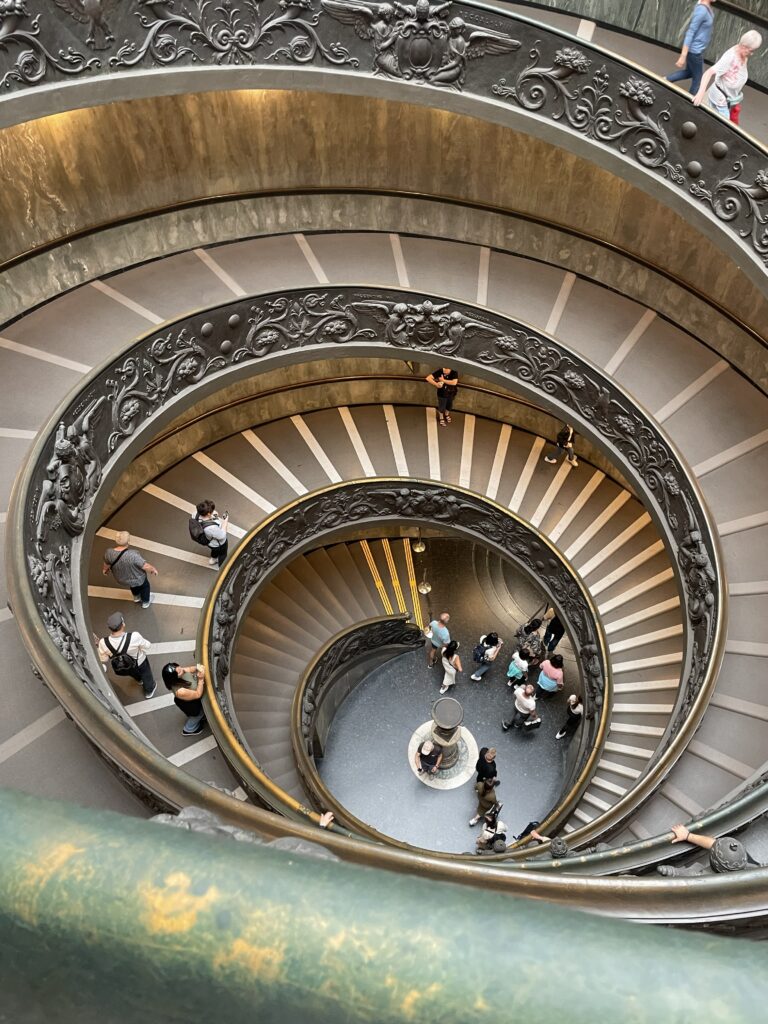
The spiral staircase at the end of the tour is also really special. The double helix design and the ornate railings spiraling down are stunning and it makes for an incredible photo looking down from the top.
Rome and Florence Itinerary: Food and Experiences
I did not think I was into art before this trip. Florence corrected that completely, and I came home genuinely surprised by how much it moved me.
The Duomo
We went inside the Florence Cathedral, the Duomo, and also explored the lower level where historical artifacts and original sculptures are on display. It is one of the most recognizable buildings in the world and it is still more impressive in person than in any photograph.
Michelangelo’s David and the Accademia
Seeing the David at the Accademia Gallery was a revelation for me. I was completely unprepared for how beautiful he is. The photos really do not do justice to the scale or the detail. I stood in front of him for a long time and I am not even a little embarrassed about that.
The Uffizi Gallery
We went to the Uffizi the same day as the Accademia and I would strongly advise against doing that. By the halfway point of the Uffizi I was starting to lose focus, and it was not because the museum is not incredible. It absolutely is. I had just given everything I had at the Accademia earlier in the day. Both of these are world-class museums and they each deserve a full day of your undivided attention.
🌿 Travel Tip: Do not visit the Accademia and the Uffizi on the same day. Book them on separate days so you can give each one the attention it deserves. This is probably the number one thing I wish someone had told me before we went. It is the kind of mistake that is easy to make on a Rome and Florence itinerary when you are trying to fit everything in.
What Florence gave me was a genuine and completely unexpected love of statues and painted ceilings. I came home a different kind of traveler because of it.
The Tuscan Farmhouse
One evening we went to a farmhouse just outside Florence and it was one of the most fun nights of the whole trip. A sweet woman taught us to make gelato from scratch, genuinely fun and genuinely delicious. Then two Italian guys took over to teach us how to make pizza. They were absolutely hilarious and had us tossing dough and laughing the whole time.
And then at some point we stepped outside and stood on a hill on the property and looked out over Florence below us in the evening light.
I did not want to leave. It was one of those moments you simply cannot plan for and that is what makes it so special.
“There are moments in travel that become core memories the instant they are happening. Standing on that hillside looking out over Florence was one of them.”
Rome and Florence Itinerary: Florence and Tuscany
Tuscany Day Trip from Florence: Siena, San Gimignano and Pisa
We took a guided day trip from Florence through three very different Tuscan towns and it was one of the best full days of the entire trip.
Siena
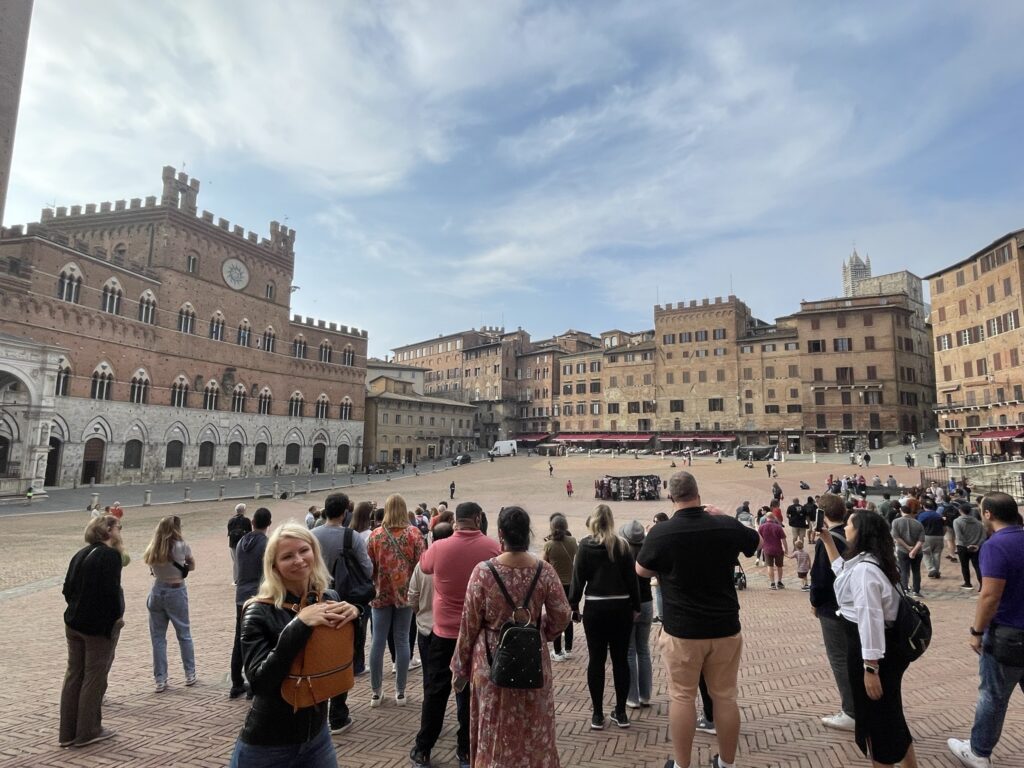
Siena was my favorite stop of the day. We had a local guide who walked us through the town and told us all about its history, including the Palio, which is a bareback horse race held twice a year in the Piazza del Campo. The race goes back to the Middle Ages and the city is divided into neighborhoods called contrade that all compete against each other. Even without a race happening you can feel how much pride the locals carry for their neighborhood. It was fascinating to hear about from someone who grew up with it.
We also saw the Monte dei Paschi di Siena, which is considered the oldest surviving bank in the world, founded in 1472 and still operating today. I could not get over that.
🌿 Travel Tip: Having a local guide in Siena makes a huge difference. The history is so layered that without someone explaining it, you are really just looking at beautiful old buildings without understanding what makes them significant. A good guide turns a pretty town into a living story.
Lunch at a Vineyard
Between Siena and San Gimignano, our tour included lunch at a Tuscan vineyard and it was a really wonderful addition to the day. Sitting at a long table with local wine and views of the rolling Tuscan hills at a relaxed pace is exactly the kind of experience that separates a thoughtfully planned trip from a rushed checklist tour. If your Tuscany day trip does not include a vineyard stop, I would ask about adding one.
San Gimignano
San Gimignano was such a cool town. The medieval towers and the stone streets and the views across the countryside are really beautiful, and our guide brought all the history to life throughout. It feels like stepping back in time and the whole place is just interesting to walk around.
And then there was the gelato.
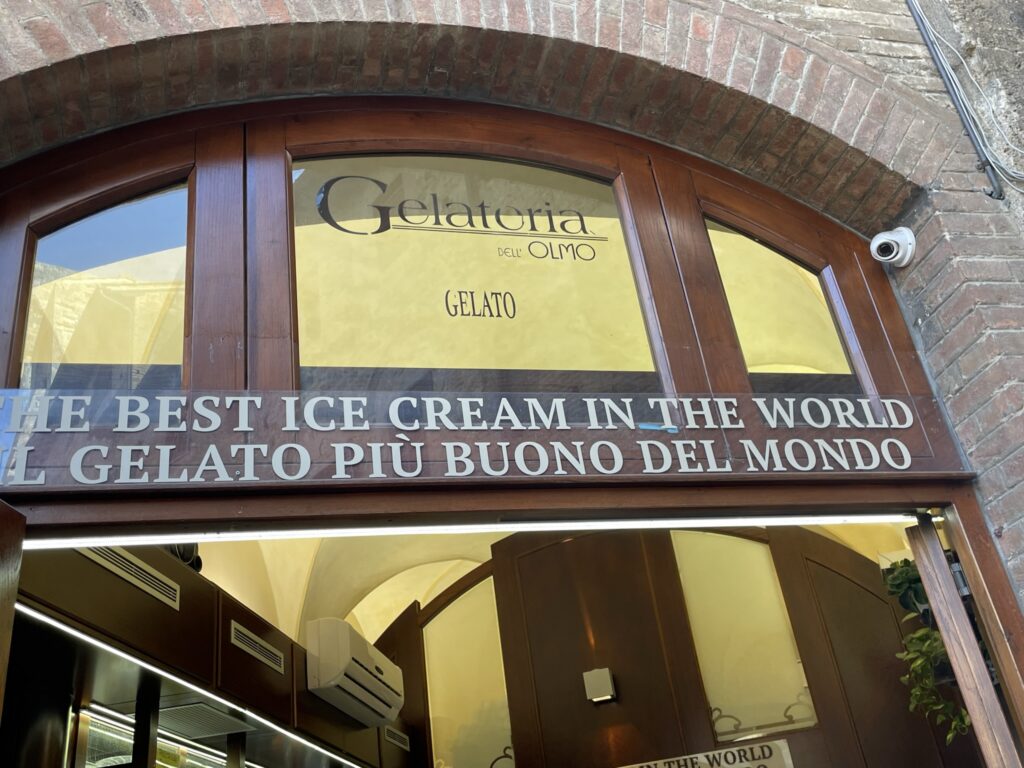
Gelateria dell’Olmo calls itself the best gelato in the world and after tasting it I am not going to argue with them. It was really, really good, and I say that as someone who had also just learned to make gelato from scratch at a Tuscan farmhouse.
Pisa
Pisa was cool to see and I am glad we went. The Leaning Tower and the square around it are genuinely beautiful. That said, it is kind of a one and done destination for me. There is not a lot to it beyond the tower itself and I probably would not go back. As a stop on a Tuscany day trip it works perfectly though.
Rome and Florence Itinerary – What It Taught Me
Rome taught me that a place can be imperfect and still be completely worth it. Florence taught me that I love art more than I ever realized. Tuscany reminded me that some of the best moments of a trip happen around a table with good food and good wine, not at a landmark.
The experiences that made this part of our trip truly memorable were almost always the same kinds of things: a knowledgeable local guide, a thoughtful hotel choice and experiences built around genuine immersion rather than just seeing sights. The food tour in Trastevere. The farmhouse evening. The vineyard lunch. Those are the moments I still talk about.
That is what good trip planning makes room for, and it is a big part of why I love what I do. If I were advising someone on a Rome and Florence itinerary today, I would tell them exactly what I told you here.
If you are planning a Rome and Florence itinerary, the most important thing I can tell you is to pace yourself.
“Italy rewards curiosity. It rewards the person who is willing to duck into a side street, take an underground tour, or sit in a piazza and just watch the world go by.”
Part 3 Is Coming April 9th
Next up is Venice, Switzerland and Paris, where the trip took some unexpected turns and finished in the most beautiful way. That post goes up Wednesday, April 9th and I cannot wait to share it with you.
Read Part 1 of our Italy Anniversary Trip here! | Browse all Europe travel posts
Rome and Florence Itinerary Is Waiting
If this Rome and Florence itinerary has you ready to start planning your own trip, I would love to help you plan it. I have been there. I know what works, what I would skip, and how to build an itinerary that actually fits the way you travel rather than a one-size-fits-all package tour.
Whether it is Italy, Ireland, Alaska or somewhere entirely your own, reach out and let’s start talking.
📅 Book a planning call here 📩 Whispering Willow Travel
Every Journey Writes a Story. What will yours say?
Karla Tugan, Owner and Travel Designer, Whispering Willow Travel
Rome and Florence Itinerary: Frequently Asked Questions
Here are the questions I hear most from travelers planning a Rome and Florence itinerary.
How many days do you need in Rome on a Rome and Florence Itinerary?
I would recommend at least 4 nights in Rome so you can cover the Colosseum, the Vatican, Trastevere and the main neighborhoods without feeling rushed. We split our stay between two hotels, The Tribune near the Spanish Steps for the first two nights and the Waldorf Astoria for the last two, and that approach worked really well for us. The first hotel gave us the central location we needed to hit the ground running, and the Waldorf gave us the full luxury experience once we were settled in.
Is the Vatican worth visiting if you are not religious?
Absolutely. The Vatican Museums contain some of the most significant art and historical objects in the world, including the Gallery of Maps, the papal carriage collection and the Sistine Chapel. The ceilings alone are worth an entire day. I was raised Catholic and the Vatican was deeply personal for me, but the experience is extraordinary regardless of your background.
Should I visit the Accademia and the Uffizi on the same day on Rome and Florence Itinerary?
No, and I would put this at the top of my advice for any first-time Florence visitor. Both museums are world-class and both require real energy and attention to fully appreciate. By the time I got halfway through the Uffizi after a morning at the Accademia, I had genuinely run out of capacity to take in what I was seeing. Give each museum its own day.
What is the best food experience in Rome?
A small group evening food tour through Trastevere is one of the best things you can do in Rome. You get great food, a wonderful neighborhood, genuine local history including underground sites that most tourists never see, and expert guidance on how to eat well in the city. I now recommend it to every single client I send to Rome.
What is the best gelato in Tuscany?
Gelateria dell’Olmo in San Gimignano makes a very strong case for the best in the world. I say that having tasted quite a lot of gelato on this trip, including gelato I made from scratch at a Tuscan farmhouse. It was exceptional.
Is Pisa worth visiting on a Tuscany day trip?
Yes, as one stop among several it is worth seeing. The Leaning Tower and the Piazza dei Miracoli are genuinely beautiful. Most people find it is a one-time visit rather than somewhere they would plan a whole separate trip around, but as part of a Tuscany day trip it fits really well.
What is the Vicus Caprarius in Rome?
The Vicus Caprarius, also called the City of Water, is an ancient Roman archaeological site that was discovered beneath the Trevi Fountain during construction in the 1990s. You walk on catwalks above the excavated ruins and see structures from ancient Rome. It is one of the most underrated things to do in Rome and I recommend it to every client.
What is the best two-hotel strategy for a Rome and Florence Itinerary?
Stay somewhere central like near the Spanish Steps or the Borghese Gardens for your first couple of nights so you can explore easily right away, then move to a grand luxury hotel like the Waldorf Astoria for your last couple of nights when you are ready to slow down and really enjoy where you are staying. Both The Tribune and the Waldorf Astoria were wonderful in completely different ways, and doing both gave us the best of everything.
Use this Rome and Florence itinerary as your starting point and reach out if you would like help personalizing it for your trip.
COMING NEXT IN THIS SERIES:
Part 1: Naples, the Amalfi Coast and the Trip We Waited Four Years to Take
Part 2: Rome, Florence and the Soul of Italy
Part 3: Venice, Switzerland and the Magic of Paris
Whispering Willow Travel specializes in luxury and independent travel including European itineraries, cruises and custom trip planning. Everything described in this post is firsthand experience.
- European River Cruises for Couples: The Complete Planning Guide
- Alaska Shore Excursions: What a Certified Alaska Expert Actually Recommends
- Why a Guided Ireland Group Tour Is the Best Way to Finally Do This Trip
- Ireland Is Everything People Say It Is (And Then Some)
- Ireland Road Trip Planning | Whispering Willow Travel

LEAVE A COMMENT
Comments